
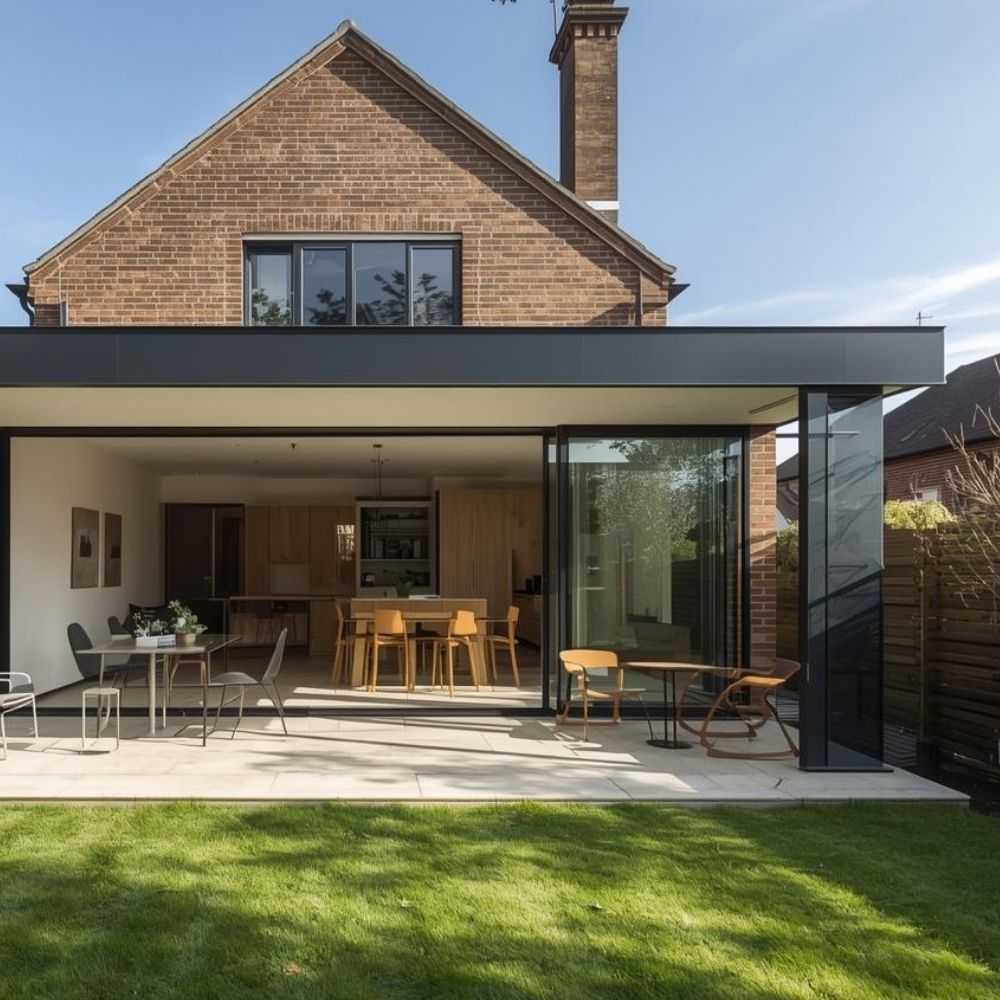
How Much Does a House Extension Cost in Aylesbury?
A house extension is one of the most significant investments an Aylesbury homeowner can make — and in a part of Buckinghamshire where the premium for additional floor area is well established in the market, it consistently delivers a strong return when properly executed. In a town where moving to a larger property means competing in one of the most expensive property markets in the county, extending rather than moving has become the preferred approach for a large number of Aylesbury households who need more space without leaving the area.
What an extension actually costs is a question that national average figures answer poorly. The Aylesbury market has its own labour costs, its own ground conditions, its own planning landscape and its own specification expectations — all of which place the real cost of an extension in a specific position within the national range. This post gives you the realistic figures for this particular market and explains what determines where your project will sit.
What Does a House Extension Cost in Aylesbury?
Realistic current prices from a reputable Aylesbury builder:
Single storey rear extension:
- Up to 15 sqm: £40,000–£62,000
- 15–25 sqm: £57,000–£91,000
- 25–40 sqm: £84,000–£128,000+
Double storey extension:
- Standard two-storey addition: £82,000–£145,000+
Side return extension:
- Standard side infill: £46,000–£76,000
Wrap-around extension:
- Combined rear and side: £76,000–£132,000+
These are finished, installed prices covering structural work, roofing, external walls, glazing, internal plastering, floor finishes and basic decorating. Kitchen or bathroom fitting within the new space, bespoke joinery and premium glazing systems are priced separately.
Aylesbury sits at the upper-mid range of the Buckinghamshire construction market. For HP17 to HP22 postcodes and the surrounding area, the figures above represent realistic current pricing from an established local contractor.
The Main Extension Types
Single Storey Rear Extension
The most common extension type across Aylesbury’s residential streets — and the one that delivers the most consistent transformation to how the ground floor functions. For the inter-war and post-war semis of Bedgrove, Fairford Leys and Elmhurst where the original kitchen and dining areas are separated and undersized, a rear extension combined with an open-plan reconfiguration creates a connected space the original layout could never provide.
Bi-fold or sliding door systems are the standard glazing expectation across the Aylesbury market and add meaningfully to the cost over a standard door and window arrangement. Many single storey extensions fall within permitted development. In Aylesbury’s surrounding villages — particularly Wendover’s conservation area — PD rights may be more restricted.
Double Storey Extension
A double storey addition costs more but delivers considerably more floor area than a single storey of equivalent footprint. For Aylesbury families who need both ground floor living space and an additional bedroom, it delivers the best cost per square metre of any extension type. The additional cost over a single storey of equivalent footprint typically runs 40 to 60 percent — but the usable floor area added is roughly double.
Side Return and Wrap-Around Extensions
Side return extensions suit the Victorian and Edwardian terraces of the historic town centre — filling the narrow passage alongside these properties to widen the kitchen and improve the ground floor layout. A wrap-around combines rear and side return into an L-shaped addition that substantially increases the ground floor footprint — the most transformative single storey extension type and the one most commonly requested alongside an open-plan conversion.
What Affects the Final Price?
Ground Conditions
Aylesbury sits in the Vale of Aylesbury — predominantly on clay soils that are more susceptible to seasonal movement than chalk or gravel. Clay requires more careful foundation design and in some cases deeper strip foundations or engineered solutions where significant trees are present nearby. Mature tree root zones are a particular consideration on the larger plots of the Vale villages and the established residential areas of Aylesbury town. A site investigation before design is finalised can identify ground conditions that affect the foundation specification and therefore the project cost.
Specification
Specification is the most significant variable in extension costs across Aylesbury’s market — and the one most within the homeowner’s control. Full-width bi-fold glazing, underfloor heating, roof lanterns and premium internal finishes are the standard expectation on mid-to-upper projects across the area. The structure and roof of an extension are broadly fixed once the design is agreed — the specification of what goes into and around it can move the total project cost by 30 to 50 percent.
Planning and Conservation Constraints
Aylesbury’s surrounding villages present a more complex planning environment than the town itself. Wendover’s conservation area, Green Belt designations across parts of the Vale, and the village settings of Haddenham, Weston Turville and the surrounding parishes all create planning constraints that affect what is acceptable under permitted development. Extensions that would be straightforward PD in most of Aylesbury may require a full planning application in these locations — adding professional fees, drawing costs and a determination period.
Party Wall and Site Access
For the terraced and semi-detached properties that make up a significant proportion of Aylesbury’s housing stock, structural work near a shared boundary triggers the Party Wall etc. Act 1996. Budget for party wall surveyor’s fees of £800–£1,500 if the neighbour requires a formal award. Properties in the tightly built Victorian streets around the town centre occasionally present access challenges for materials and skip placement — a factor that adds to the project cost on constrained sites.
How Long Does an Extension Take in Aylesbury?
A realistic end-to-end guide:
- Single storey, permitted development: five to eight months total
- Single storey, planning required: seven to eleven months total
- Double storey, planning required: nine to thirteen months total
- Wrap-around, planning required: eight to twelve months total
The pre-build phase — design, planning where required, structural engineering and party wall — typically accounts for two to four months. The on-site build for a standard single storey Aylesbury extension runs twelve to eighteen weeks depending on size and specification.
If you are planning a house extension in Aylesbury, Wendover, Haddenham, Thame, Stoke Mandeville or anywhere across the Vale of Aylesbury, get in touch and we will come out to discuss your project and give you a clear, itemised quote. Get in touch to arrange a visit.